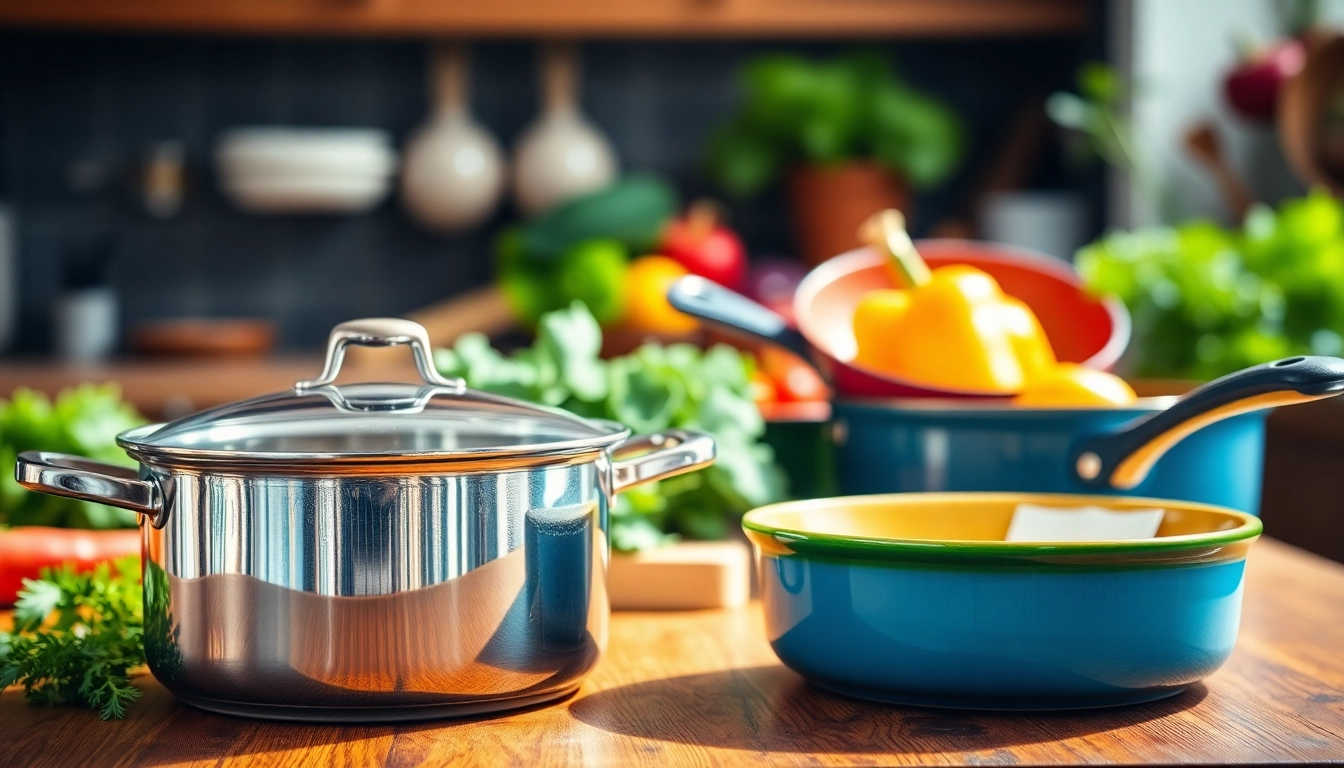
Understanding Cookware Types
What is cookware and its importance?
Cookware refers to a variety of pots, pans, and other vessels that are used for cooking food. From the humble frying pan to elaborate roasting pans, cookware is essential in every kitchen. It plays a crucial role not just in the preparation of meals but also contributes to the quality and flavor of what we eat. The right cookware can facilitate even heating, versatile cooking methods, and easy cleaning. Investing in quality cookware is vital for both amateur cooks and seasoned chefs, as it can significantly enhance cooking performance and enjoyment in the kitchen.
Various materials used in cookware
Cookware is made from a range of materials, each offering unique properties that affect cooking results:
- Stainless Steel: Known for its durability and non-reactive properties, stainless steel is ideal for browning and deglazing.
- Cast Iron: Excellent for heat retention and even heating, it’s perfect for slow-cooked meals and frying.
- Nonstick: Great for low-fat cooking, providing easy food release, but can be less durable, especially with metal utensils.
- Copper: Offers superior heat conductivity, allowing for precise temperature control, but requires more maintenance.
- Aluminum: Lightweight with excellent heat conduction, but it's usually coated or anodized to prevent reactions with acidic foods.
How cookware affects cooking performance
The choice of cookware can dramatically influence cooking performance. Factors like heat conduction, material durability, and reactivity can affect how well food cooks. For example:
- Stainless steel’s built-in capacity for even heat distribution makes it ideal for cooking sauces.
- Cast iron, when seasoned properly, becomes nonstick and imparts a flavorful crust on meats.
- Nonstick cookware ensures food cooks without sticking, which is crucial for delicate items like eggs and fish.
Choosing the Right Cookware for Your Needs
Assessing your cooking style
Your cooking style plays a vital role in determining the best cookware for your kitchen. Ask yourself questions like:
- Are you a casual cook who prepares simple meals, or do you enjoy elaborate dishes?
- Do you prefer fast meals or slow-cooked recipes that require more specialized cookware?
Understanding your habits such as preferred cooking methods will guide you in selecting the right pieces.
Cookware sets vs. individual pieces
When building your cookware collection, you can choose between purchasing complete sets or individual pieces. Cookware sets offer convenience and match in aesthetic but may include items that are less useful. On the other hand, individual pieces allow for a tailored approach to fit your cooking needs perfectly, but can be more expensive in the long run. A combination of both is often the best route.
Factors to consider: size, weight, and heat conductivity
Size, weight, and heat conductivity are crucial factors to evaluate. Larger pieces are necessary for family meals, while lighter cookware can be easier to handle. Heat conductivity varies based on materials, affecting how quickly cookware heats up and how evenly it distributes heat. For instance, copper heats quickly while cast iron retains heat longer.
Maintenance and Care of Cookware
Best cleaning practices for different materials
Maintaining cookware requires appropriate care depending on the material:
- Stainless Steel: Use mild detergents and avoid abrasive scrubbers to preserve shine.
- Cast Iron: Clean with hot water and a stiff brush; avoid soap, and always re-season after drying.
- Nonstick: Utilize soft sponges and avoid metal utensils to prevent scratching.
- Copper: Polish regularly to maintain its appearance and prevent tarnishing.
How to store cookware effectively
Proper storage is essential to extend the life of cookware:
- Stacking pots and pans can cause scratches; use padded protectors or hang them.
- Store lids separately to prevent them from clattering or becoming damaged.
- Keep cookware in a dry area to avoid moisture that can lead to rust, particularly for cast iron.
Dealing with common issues
Common issues such as food sticking to pans, discoloration, or warping can be avoided through proper usage and care. If food begins to stick, it may indicate that your nonstick cookware is degrading or that it's time for reseasoning your cast iron. Discoloration can often be removed through specialized cleaners or supported by a proper scrubbing technique.
Innovative Features in Modern Cookware
Nonstick technology advancements
The evolution of nonstick cookware has transitioned from basic Teflon coatings to advanced ceramic and titanium-infused surfaces. These newer technologies provide improved resistance to abrasion and scratching, alongside better heat retention, resulting in healthier cooking with less oil.
Induction-compatible cookware
Induction cooking is gaining popularity as it allows for more precise heat control and faster cooking times. Cookware made for induction ranges is typically made of magnetic materials. When shopping, look for indications that the cookware is compatible with induction to ensure optimal performance.
Eco-friendly cookware options
Environmental considerations are leading to a rise in eco-friendly cookware materials. Options such as recycled aluminum and sustainably sourced organic ceramics are becoming increasingly available, reducing your carbon footprint and contributing to a more environmentally responsible cooking practice.
Buying Cookware: Where to Find Quality Options
Online shopping versus retail stores
When purchasing cookware, both online shopping and retail stores have pros and cons. Online retailers frequently offer a wider selection and often better prices due to lower overhead costs. However, buying in-store allows you to handle the cookware before purchasing, so you can assess weight and quality, which might influence your decision.
Price vs. quality considerations
It’s crucial to balance price with quality. Cheaper cookware may seem appealing but can lead to disappointment with performance and durability. Investing in higher-quality pieces can provide better longevity, enhanced cooking results, and improved satisfaction in the kitchen. Consider brands that offer warranties to protect your investment.
Customer reviews and warranty insights
Understanding customer reviews can provide invaluable insights into the strengths and weaknesses of different cookware. Reading real user experiences can highlight durability, performance, and ease of cleaning. Additionally, always check warranty information; quality cookware often comes with a solid warranty, reflecting the manufacturer's confidence in their product.
FAQs about Cookware
What cookware is best for beginners?
Beginners should opt for versatile items like a nonstick frying pan, a saucepan, and a stockpot. These essentials can handle most cooking tasks without overwhelming novices.
How can I minimize scratches on nonstick pans?
Use wooden or silicone utensils to prevent scratching and always clean with soft sponges. Avoid overheating the pans, as this can also damage the surface.
Is cast iron cookware worth the investment?
Absolutely! Cast iron cookware is exceptionally durable, retains heat well, and adds flavor to food when properly cared for, making it a worthwhile investment.
Can I put nonstick cookware in the dishwasher?
It's best to hand wash nonstick cookware to retain its nonstick properties and longevity. Dishwashers can be harsh and degrade the surface quickly.
How do I know if cookware is induction-friendly?
Induction-compatible cookware has a flat, magnetic base. You can check by placing a magnet on the base; if it sticks, it will work on induction cooktops.